Pakistan Travel Guide: Planning a Trip to Pakistan
By Imtiyaz Ahmed Shigri, founder of Chogori Adventure, Skardu · Updated November 2026
Pakistan is best visited in two seasons: April to October for the mountains of the north (Hunza, Skardu, Fairy Meadows and the Karakoram), and October to March for Lahore, Islamabad, Peshawar and the south. You apply for the visa online, arrive in Islamabad, Lahore or Karachi, and travel on by domestic flight or road. This guide explains the regions, the best time for each, how to get a visa and get around, what a trip costs, sample itineraries from 7 days to three weeks, and the customs and practical tips that make a first visit easier.

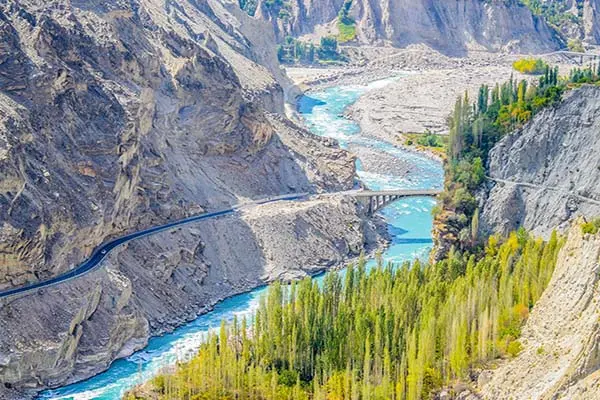
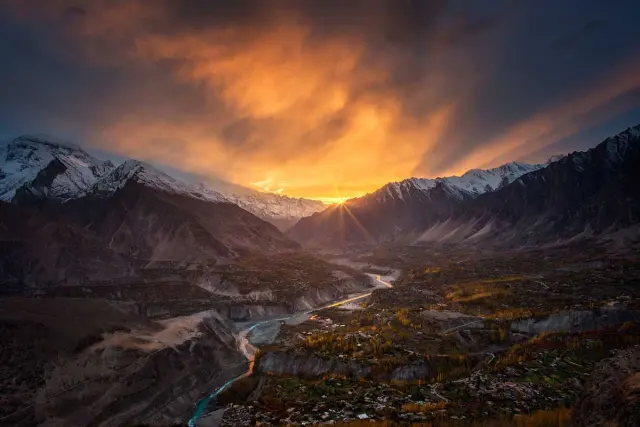
The Hunza valley in Gilgit-Baltistan, northern Pakistan.
Pakistan at a glance
| Fact | |
|---|---|
| Capital | Islamabad |
| Largest cities | Karachi, Lahore |
| Languages | Urdu (national), English (official), and regional languages |
| Currency | Pakistani rupee (PKR) |
| Main airports | Islamabad, Lahore, Karachi; domestic flights to Skardu and Gilgit |
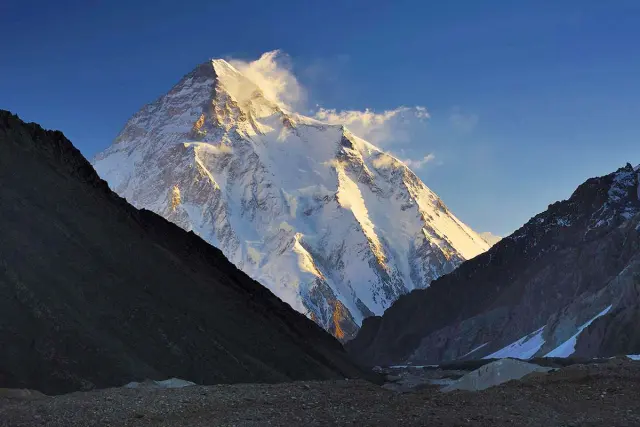
| Highest mountain | K2, 8,611 m, the second-highest on Earth |
| UNESCO World Heritage Sites | 6, all cultural |
| Best time | North: April–October · South and cities: October–March |
| Visa | Apply online at visa.nadra.gov.pk |
Why visit Pakistan?
- The mountains: five of the world's fourteen 8,000 m peaks, including K2 and Nanga Parbat, and some of the longest glaciers outside the polar regions.
- History: from the Indus Valley cities of Mohenjo-daro and Harappa to Buddhist Gandhara and the Mughal monuments of Lahore.
- Hospitality: visitors are often treated as honoured guests, with endless cups of tea.
- Few crowds: even the famous valleys of the north see far fewer foreign visitors than the mountains of neighbouring countries.
- Variety: deserts, river plains, green valleys and high mountains, all in one country.
The regions of Pakistan
Gilgit-Baltistan: the high mountains
The far north is the reason most visitors come. Gilgit-Baltistan holds the Karakoram, the western end of the Himalaya and part of the Hindu Kush, with K2 (8,611 m), Nanga Parbat (8,126 m) and many of the longest glaciers outside the polar regions. Its main areas are below (our Gilgit-Baltistan travel guide covers the whole region):
- Hunza and Nagar: terraced villages, the forts of Baltit and Altit, Attabad Lake, the Passu Cones and the Khunjerab Pass on the Chinese border. See our Hunza Valley guide and Hunza Tour.
- Skardu and Baltistan: the Kachura lakes, Shigar and Khaplu palaces, the Deosai Plains and the gateway to K2. See our guide to places to visit in Skardu and our Skardu tour packages.
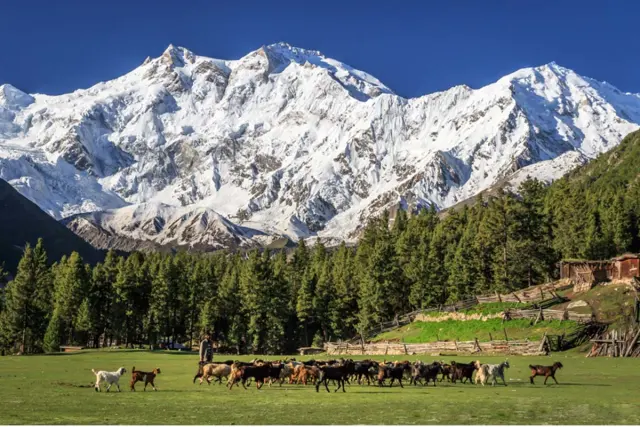
- Fairy Meadows and Nanga Parbat: a forest meadow facing the north face of Nanga Parbat, reached from the Karakoram Highway. See our Fairy Meadows Trek.
- Hushe, Khaplu and the Baltoro: the treks to K2 Base Camp, the Gondogoro La and Laila Peak. See our Hushe Valley guide.
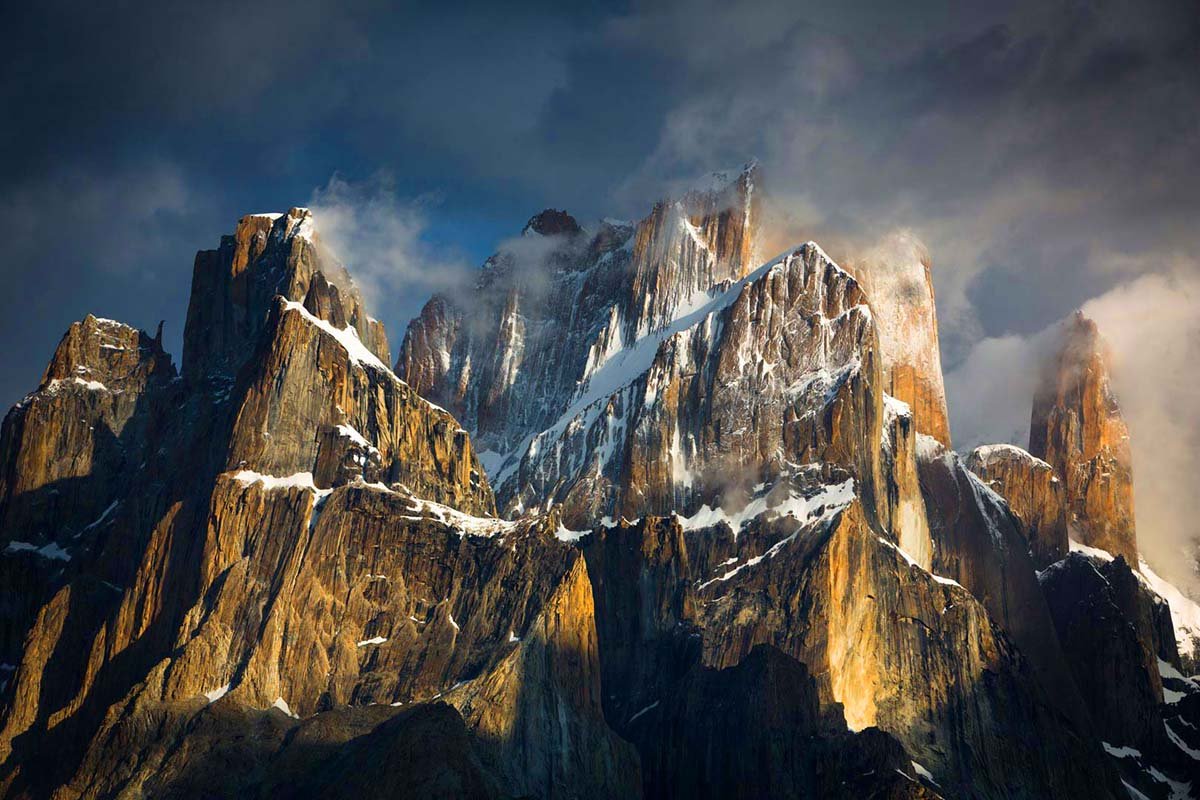
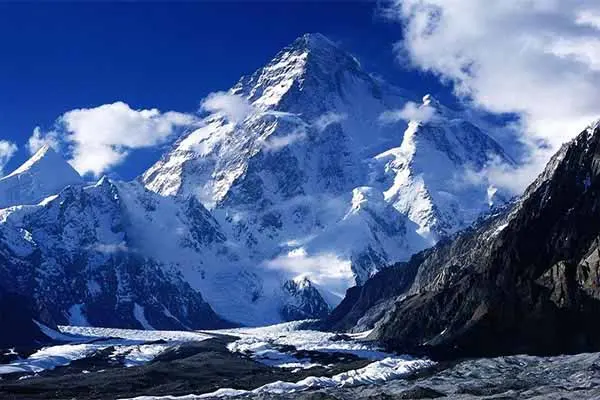
The Trango Towers on the trek to K2, in the Karakoram.
Kaghan and Naran
On the way north from Islamabad in summer, the Kaghan valley and the town of Naran lead up to the Babusar Pass (4,173 m) and down to the Karakoram Highway at Chilas. It is a green, popular summer route with lakes and pine forest, and a scenic alternative to the lower highway when the pass is open. Our North Pakistan Group Tour travels this way to Hunza and Skardu.
The Karakoram Highway
The Karakoram Highway itself is one of the great road journeys of the world: about 1,300 km from Hasan Abdal in Punjab, past Besham, Chilas, Gilgit and Hunza, to the Khunjerab Pass (4,693 m) on the Chinese border. It follows the Indus and Hunza rivers through deep gorges, with views of Nanga Parbat, Rakaposhi and the peaks of Hunza along the way.
Chitral and the Kalash valleys
In the north-west, in Khyber Pakhtunkhwa, Chitral lies below Tirich Mir in the Hindu Kush. Its side valleys are home to the Kalash people, with their own language, festivals and traditions. Our Hindu Kush, Pamir and Karakoram Tour links Chitral and the Kalash valleys with the Shandur Pass, Gilgit and Hunza.

A Kalash valley in the Hindu Kush.
Swat and Gandhara
North of Peshawar, the green valley of Swat was once a centre of Gandhara Buddhism, with stupas and rock carvings among its orchards and rivers. Together with Taxila and Takht-i-Bahi, it is the heart of our Buddhist Pilgrimage Tour.
Punjab: Lahore and Islamabad
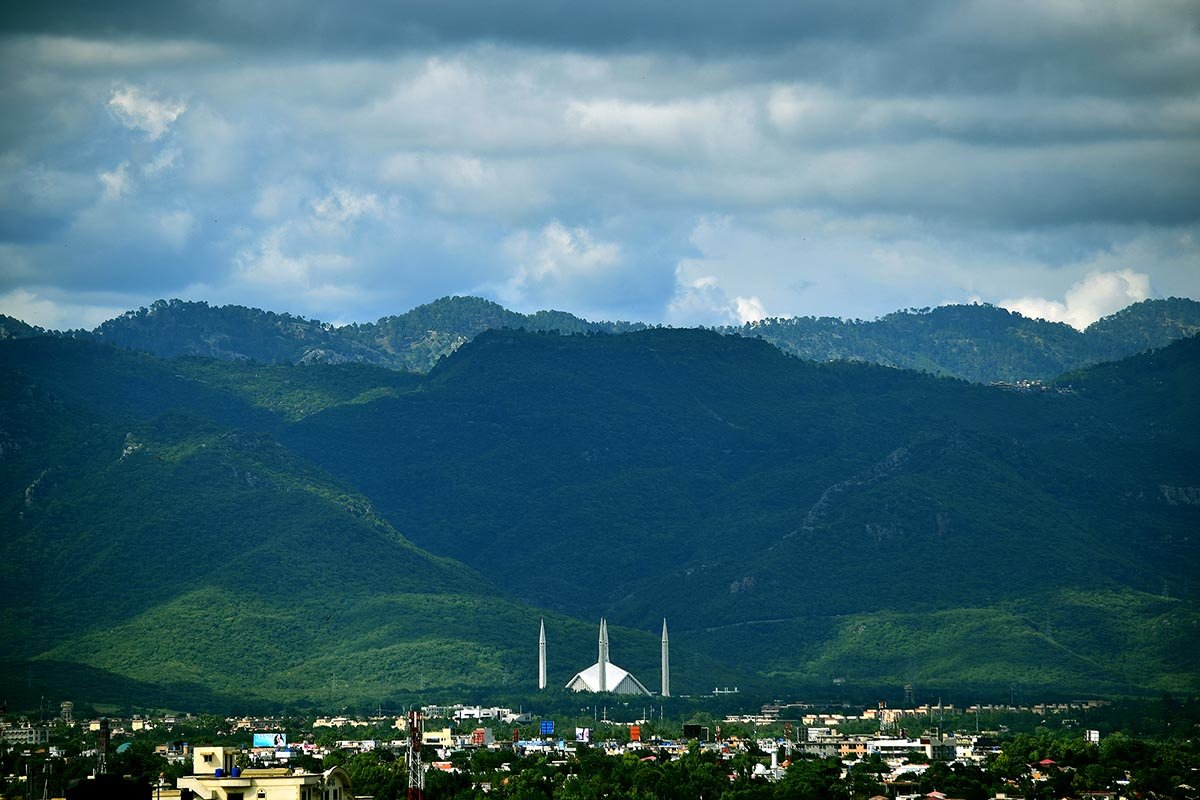
Lahore is Pakistan's cultural capital, with Lahore Fort and the Shalimar Gardens (both UNESCO), the Badshahi Mosque, the Walled City and its food streets: see our Lahore City Tour. Islamabad, the capital, is a green, modern city built from the 1960s below the Margalla Hills, with the Faisal Mosque, the Pakistan Monument and walking trails in the hills; its twin city, Rawalpindi, has older bazaars. Nearby, Taxila (UNESCO) holds the ruins of an ancient city and Buddhist monasteries, and Rohtas Fort (UNESCO) stands on the Grand Trunk Road.
Peshawar and Khyber Pakhtunkhwa
Peshawar is one of the oldest cities in South Asia, with the Qissa Khwani Bazaar, the Mahabat Khan Mosque and a fine collection of Gandhara art in the Peshawar Museum: see our Peshawar City Tour. Not far away lie the Buddhist ruins of Takht-i-Bahi (UNESCO).
Sindh and the south
In the south, Karachi is Pakistan's largest city and its port. Inland lie Mohenjo-daro, one of the great cities of the Indus Valley civilisation (UNESCO), and the vast necropolis of Makli near Thatta (UNESCO). Multan, the "city of saints", has some of the finest shrines in Pakistan. See our South Pakistan Cultural Group Tour and Indus Valley Civilization Tour.
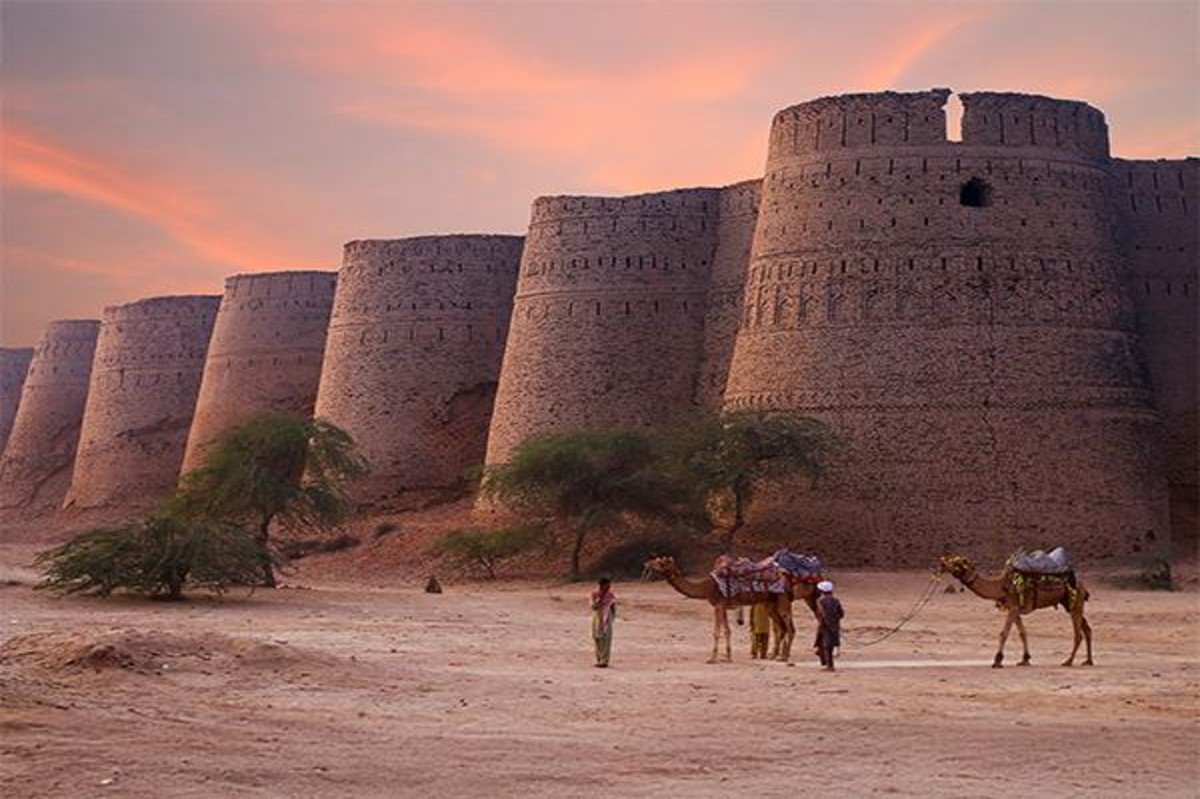
Southern Pakistan, the land of the Indus civilisation and great shrines.
The six UNESCO World Heritage Sites of Pakistan
| Site | Where | Listed |
|---|---|---|
| Archaeological ruins at Mohenjo-daro | Sindh | 1980 |
| Buddhist ruins of Takht-i-Bahi and Sahr-i-Bahlol | Khyber Pakhtunkhwa | 1980 |
| Taxila | Punjab, near Islamabad | 1980 |
| Lahore Fort and Shalimar Gardens | Lahore | 1981 |
| Historical monuments at Makli, Thatta | Sindh | 1981 |
| Rohtas Fort | Punjab | 1997 |
Our cultural tours visit most of them: the Pakistan Cultural Tour (Lahore, Rohtas Fort area, Peshawar, Swat, Taxila), the Indus Valley Civilization Tour (Mohenjo-daro) and the South Pakistan Cultural Group Tour (Makli and Mohenjo-daro).
Best time to visit Pakistan
| Region | Best months | Notes |
|---|---|---|
| Hunza, Skardu, Gilgit-Baltistan | April – October | Blossom in April; autumn colours in October; cold winters |
| Treks in the Karakoram | June – September | High passes mainly July and August |
| Fairy Meadows | May – November | Snow possible in May and November |
| Deosai Plains | July – September | Closed by snow the rest of the year |
| Chitral and Kalash | May – October | Festivals in spring, summer and winter |
| Lahore, Islamabad, Peshawar | October – March | Very hot from May to August |
| Sindh (Karachi, Mohenjo-daro) | November – February | Hot most of the year |
A trip that combines the north and the cities works best in April–May or September–October, when the mountains are open and the plains are not too hot. The holy month of Ramadan moves about 11 days earlier each year; during it, many restaurants close in the daytime, and travel is quieter.
Visa and entry
For every visa type, the documents, the permits and a table of which places need which visa, see our Pakistan visa guide.
Most visitors apply for a Pakistan visa online on the official website, visa.nadra.gov.pk. For a tour or trek with us, we send you a letter of invitation, which supports your application. Apply well before you travel, and check that your passport is valid for at least six months. Most of northern Pakistan needs no other permit; for treks near the borders, such as K2 and Snow Lake, we arrange the trekking permit for you.
Getting to Pakistan
Most international flights arrive at Islamabad, which is the best gateway for the north, or at Lahore and Karachi, which suit cultural tours. Many travellers fly in via the Gulf. Our tours to the north start and end in Islamabad, where we meet you at the airport.
Getting around Pakistan
- Domestic flights link Islamabad, Lahore and Karachi, and Islamabad with Skardu and Gilgit (about one hour). Mountain flights depend on clear weather, so keep spare days.
- The Karakoram Highway runs north from Islamabad to Hunza and the Chinese border; Skardu is reached by the Skardu Road from the highway. Most trips to the north take two days by road, with a night in Chilas.
- Motorways link Islamabad, Lahore and Peshawar quickly; long distances in the south are best by air.
- A car or minibus with a local driver is the most practical way to tour; on all our tours, transport is private, with drivers who know the roads.
For the drive between the two great valleys of the north, see our Skardu to Hunza guide.
How much does a trip to Pakistan cost?
| Trip | Days | Price from (per person) |
|---|---|---|
| Lahore City Tour | 3 | $500 |
| Skardu Tour by Air from Islamabad | 5 | $300 |
| 7-Day Pakistan Cultural Trip | 7 | $1,000 |
| Hunza Tour | 8 | $1,000 |
| Skardu Hunza Tour | 8 | $1,000 |
| Fairy Meadows and Hunza Trip | 10 | $1,200 |
| Pakistan Cultural Tour | 10 | $1,400 |
| North Pakistan Group Tour | 10 | $1,200 |
| Karakoram Highway Tour | 12 | $1,600 |
| Hindu Kush, Pamir and Karakoram Tour | 15 | $2,000 |
| K2 Base Camp Trek | 21 | $2,300 |
Prices are for our fixed departures from Islamabad (or Lahore for some cultural tours) and include hotels, transport, guides and most meals; see each trip page for details. All prices are in US dollars (USD), or the equivalent in Pakistani rupees (PKR) on the day you pay. On your own, budget hotels and local food are inexpensive, while flights to the north and private transport are the main costs.
Sample itineraries
7 days: Lahore and the Gandhara route
Lahore's fort, mosques and Walled City; Rohtas Fort; Peshawar; the Swat valley; Taxila; Islamabad. This is our 7-Day Pakistan Cultural Trip.
8 days: Hunza or Skardu
Islamabad, the Karakoram Highway and three nights in Hunza (Hunza Tour), or Skardu and Hunza in one loop (Skardu Hunza Tour).
10 days: Fairy Meadows and the north
Fairy Meadows and Nanga Parbat with Hunza (Fairy Meadows and Hunza Trip) or with Skardu (Fairy Meadows and Skardu Tour); or Naran, Hunza and Skardu on our North Pakistan Group Tour.
12–15 days: the Karakoram Highway or the Hindu Kush
The full Karakoram Highway to the Khunjerab Pass (Karakoram Highway Tour), or Chitral, the Kalash valleys, the Shandur Pass and Hunza (Hindu Kush, Pamir and Karakoram Tour).
3 weeks: K2 Base Camp
The great trek up the Baltoro Glacier to Concordia and the base camp of K2 (K2 Base Camp Trek). For all the treks, see our 10 best treks in northern Pakistan.

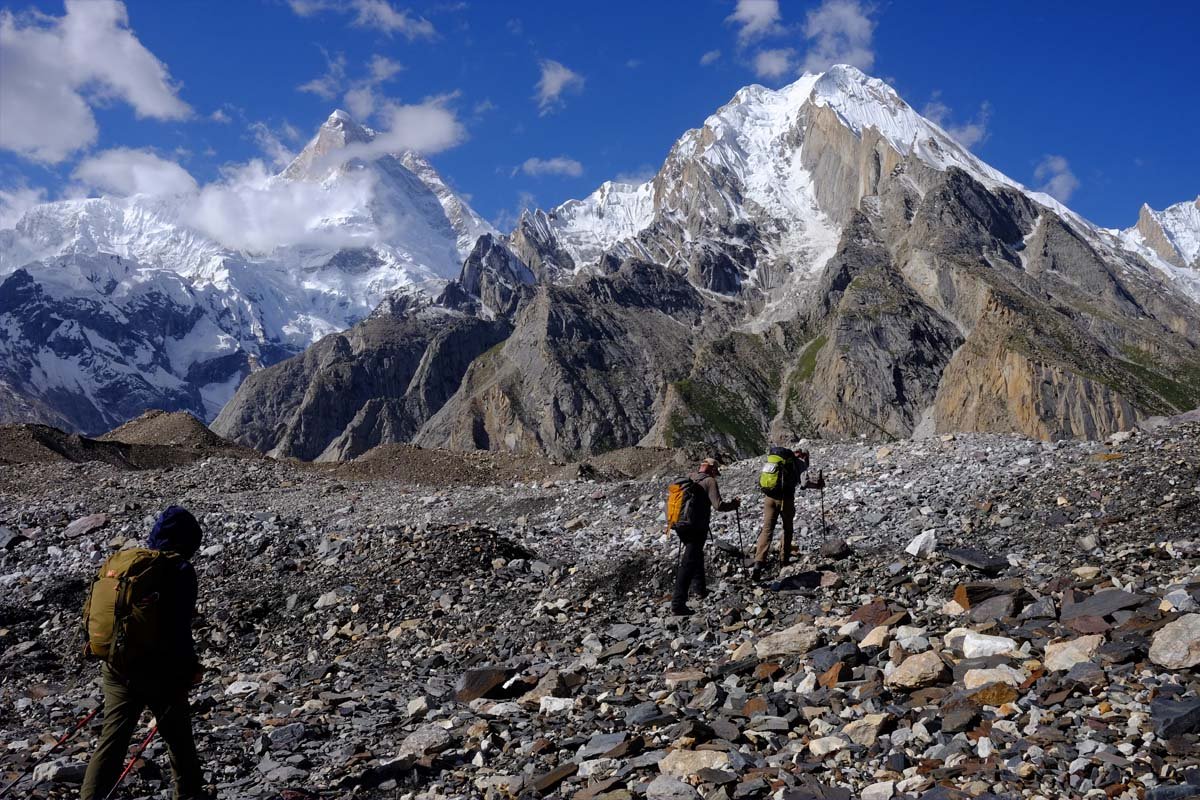
On the way to K2 Base Camp, in the Braldu valley.
Culture and etiquette
- Dress modestly: long sleeves and long trousers or skirts for everyone; women carry a scarf for mosques and shrines.
- Mosques and shrines: remove your shoes, dress modestly, and avoid visiting during prayer times unless invited.
- Photos: ask before photographing people, especially women; do not photograph military sites, airports or police posts.
- Hospitality: you will often be offered tea. Accepting is polite; refusing gently is fine too.
- Right hand: use the right hand for eating, giving and receiving.
- Ramadan: during the fasting month, avoid eating, drinking and smoking in public in the daytime.
Food in Pakistan
Pakistani food is one of the joys of a trip. In Lahore, try nihari for breakfast, karahi and seekh kebab in the evening, and the food streets near the Badshahi Mosque. Peshawar is famous for chapli kebab and green tea (kahwa). Everywhere you find biryani, daal, fresh bread, lassi and sweet milky chai. In the north the food is simpler: Hunza's chapshoro and apricots, buckwheat bread, and Balti noodle soups in Skardu. Vegetarian food is easy to find; just ask.
Money, phones and practical tips
- Money: carry some cash in Pakistani rupees; ATMs are common in cities but few in the mountains. Cards are accepted in larger hotels and shops.
- Phones: local SIM cards are sold at company shops and need your passport for registration; coverage is good in cities and patchy in the mountains.
- Electricity: 230 V; plug types C and D are common. Power cuts happen, so bring a power bank.
- Water: drink bottled or filtered water.
- Time: Pakistan is on Pakistan Standard Time (UTC+5), with no daylight saving.
- Tipping: appreciated for guides, drivers and porters; on our tours we give guidance before you travel.
What to pack
- Modest, loose clothing for the cities; warm layers and a down jacket for the north, even in summer.
- A scarf (for women) for mosques and shrines.
- Comfortable walking shoes, and trekking boots for any trek.
- Sun hat, sunglasses and sun cream for the mountains.
- A power bank, a universal adapter and a small first-aid kit.
- Copies of your passport and visa.

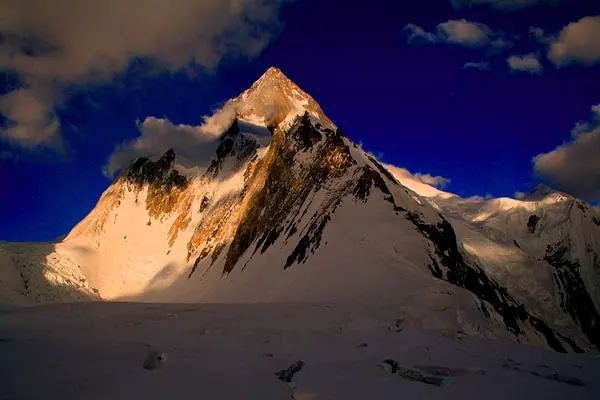
Sunset on Nanga Parbat from Fairy Meadows.
Where to stay
In Islamabad, Lahore and Karachi you find everything from international hotels to small guesthouses. In the north, Karimabad in Hunza and Skardu have hotels for every budget, and several restored palaces are now heritage hotels, such as Shigar Fort and Khaplu Palace near Skardu. In smaller valleys and on treks you stay in family-run guesthouses, wooden huts (as at Fairy Meadows) or tents. In July, August and the holidays, popular places in the north fill up, so book ahead. On our tours, hotels are included.
Festivals and events
- Navroz (around 21 March): the spring new year, celebrated in Hunza and other northern valleys.
- Kalash festivals in the Chitral valleys: Joshi in spring, Uchal in summer and Chawmos in winter, each with its own music, dances and rituals.
- Shandur Polo Festival (usually early July): polo matches between Chitral and Gilgit teams on the Shandur Pass, at more than 3,700 m.
- Ginani (21 June): the harvest festival of Hunza and Nagar.
- Eid al-Fitr and Eid al-Adha: the two great Muslim festivals; dates move each year. Travel is busy around them, and many shops close for a few days.
Festival dates can change from year to year; ask us when you plan your trip.
Health and insurance
Before you travel, see your doctor or a travel clinic about vaccinations and take out travel insurance that covers the activities you plan, including trekking at altitude if you go to the mountains. In the north, take time to adjust to altitude: Hunza and Skardu lie at about 2,200–2,500 m and treks go much higher. Drink bottled or filtered water, eat freshly cooked food, and carry a small first-aid kit with any medicines you need. Our guides are trained in first aid and carry a kit on all our trips.
Travelling with family
Pakistan is a very family-oriented country, and families are welcomed everywhere. The north suits families well: Hunza's forts and lakes, the Kachura lakes near Skardu, and the short walk to Fairy Meadows are all manageable with children. Plan shorter driving days, keep snacks and warm layers in the car, and allow time for the altitude. Lahore's fort and food streets are a favourite with all ages. Many of our tours can run as private family trips on your own dates.
Photography tips
Pakistan is wonderful to photograph, from the peaks of the Karakoram to the bazaars of Lahore. The best light in the mountains is early in the morning, before clouds build on the summits. In cities, the golden hour around the Badshahi Mosque and the Walled City of Lahore is unforgettable. Always ask before photographing people, especially women and elders, and respect a "no". Do not photograph military installations, airports or police posts, and ask before flying a drone.
Planning checklist
- Choose your season first: the north from April to October, the cities and the south from October to March.
- Pick a region or two: trying to see the whole country in one short trip means long days on the road.
- Apply for your visa online in good time, with your letter of invitation if you travel with a company.
- Book flights into Islamabad for the north, or Lahore or Karachi for cultural tours.
- Add spare days for mountain flights and roads, especially on the way home.
- Arrange insurance that covers your activities, including trekking at altitude.
- Pack for two climates if you combine the hot plains with the cool mountains.
When to book
For the main summer season in the north (June to September) and for the blossom (April) and autumn colours (October), book two to four months ahead; flights to Skardu and Gilgit and hotels in Hunza fill up early. Treks with permits, such as K2 Base Camp, need more time, ideally three to six months. For the cities in winter, a few weeks' notice is usually enough.
Shopping and souvenirs
Lahore's Anarkali Bazaar and the Walled City are good for textiles, embroidered shawls and leather; Peshawar is known for carpets, copper and dried fruit; Multan for its blue pottery and tiles. In the north, look for Hunza's dried apricots, apricot oil and woven caps, and the gemstones sold in the bazaars of Skardu and Gilgit. Bargaining is normal in bazaars, but keep it friendly.
Why travel with a local team
Pakistan rewards independent travellers, but the north in particular is easier with local help: mountain flights change, roads close after rain, some treks need permits, and much of the best accommodation is small and family-run. A local team arranges all of this, and its guides open doors to villages and traditions you would otherwise miss. We are based in Skardu, and our guides, drivers and porters come from the valleys we travel in. For all our trips, see our guided tours in Pakistan and trekking tours in Pakistan, or our Gilgit-Baltistan tour packages.
A short history in a few lines
The land that is now Pakistan has one of the longest histories in the world. The Indus Valley civilisation built Mohenjo-daro and Harappa around 4,500 years ago. Later, Gandhara, around Taxila, Peshawar and Swat, became a great centre of Buddhist art. Islam arrived from the 8th century; the Mughal emperors left their forts, mosques and gardens in Lahore; and in the mountains, small kingdoms such as Hunza, Nagar, Skardu and Chitral kept their own rulers into the 20th century. Pakistan became independent in 1947. Travelling through the country, you move through all these layers in a single trip.
Responsible travel
Choose local guides and family-run hotels, buy handicrafts and dried fruit directly from the people who make them, carry your rubbish out of the mountains, and respect local customs. In the north, tourism is an important source of income for mountain villages; travelling with local teams keeps that income in the valleys.
Frequently asked questions
Is Pakistan worth visiting?
Yes. Pakistan has some of the highest mountains on Earth, including K2 and Nanga Parbat, six UNESCO World Heritage Sites, great cities such as Lahore, and a warm tradition of hospitality, with far fewer tourists than its neighbours.
What is the best time to visit Pakistan?
For the north (Hunza, Skardu, Fairy Meadows), April to October, with June to September for treks. For Lahore, Islamabad, Peshawar and Sindh, October to March, when it is not too hot.
How many days do you need in Pakistan?
At least 7 to 10 days for one region, such as Hunza or the cultural cities; 14 days to combine the north and Lahore; three weeks or more for a trek such as K2 Base Camp.
How do I get a visa for Pakistan?
Apply online on the official Pakistan visa website, visa.nadra.gov.pk. For a tour with us, we send you a letter of invitation to support your application.
Which airports do travellers use?
Most international visitors arrive in Islamabad, Lahore or Karachi. For the north, domestic flights go from Islamabad to Skardu and Gilgit, weather permitting.
How do you travel around Pakistan?
By domestic flights between the main cities and to Skardu and Gilgit, and by road: the motorways in the south and the Karakoram Highway in the north. A car with a local driver is the most practical way to tour.
What currency is used in Pakistan?
The Pakistani rupee (PKR). ATMs are common in cities; in the mountains carry enough cash, as ATMs are few. Many tour prices are given in US dollars.
What should I wear in Pakistan?
Modest clothes: long sleeves and long trousers or skirts for everyone, and a scarf for women to cover the hair in mosques and at shrines. Loose, light clothes are best in the heat.
What are the UNESCO sites in Pakistan?
Six: Mohenjo-daro, Taxila, and the Buddhist ruins of Takht-i-Bahi (1980); Lahore Fort and the Shalimar Gardens, and the monuments of Makli at Thatta (1981); and Rohtas Fort (1997).
What is Pakistan famous for?
The Karakoram and its giants, K2 and Nanga Parbat; the valleys of Hunza and Skardu; Lahore's Mughal monuments; the ancient cities of the Indus Valley and Gandhara; and its food and hospitality.
Can I visit Pakistan on a guided tour?
Yes. Guided tours are the simplest way to visit, especially in the north, where a local team arranges transport, hotels and permits. We run tours and treks from Islamabad on fixed dates and as private trips.
Do I need a permit to travel in northern Pakistan?
Most tours in Hunza, Skardu and Fairy Meadows need no special permit, only a visa. Some treks and areas near the borders need a trekking permit, which we arrange.
How much does a trip to Pakistan cost?
On our tours, from about $500 for a 3-day Lahore city tour and $1,000 for 7–8 days in Hunza or the cultural cities, to $2,300 for the 21-day K2 Base Camp trek. All prices are in US dollars (USD), or the equivalent in Pakistani rupees (PKR) on the day you pay.
Is Pakistan good for trekking?
Yes. The Karakoram and the Himalaya in Pakistan have some of the great treks of the world, from Fairy Meadows in a week to K2 Base Camp and Snow Lake in three weeks.
What food should I try in Pakistan?
Biryani, nihari, karahi, chapli kebab, haleem, lassi and chai in the cities; in the north, Hunza's chapshoro and apricots, and Balti soups in Skardu.
Can I combine the mountains and the cities in one trip?
Yes, in about two weeks: fly or drive to the north for Hunza or Skardu, then fly back to Islamabad and continue to Lahore. Spring (April–May) and autumn (September–October) suit both.
What is the weather like in Pakistan?
It varies hugely: hot summers in Lahore, Islamabad and Sindh (often above 40 °C in June), mild days and cold nights in the northern valleys in summer, and cold, snowy winters in the mountains.
Do I need travel insurance?
Yes, it is strongly recommended. Make sure it covers the activities you plan, including trekking at altitude if you go into the mountains.
Can I visit Pakistan in winter?
Yes for Lahore, Islamabad, Peshawar and Sindh, which are pleasant from November to February. The north is very cold, some roads close and treks are not possible, though Hunza and Skardu are popular for snow.
Which is better, Hunza or Skardu?
They are different: Hunza has terraced villages, forts and Rakaposhi; Skardu has lakes, cold deserts, Deosai and the gateway to K2. With 8 days you can see both on our Skardu Hunza Tour.
Can I visit the Kalash valleys?
Yes. The Kalash valleys lie near Chitral in the Hindu Kush; our Hindu Kush, Pamir and Karakoram Tour includes them. The best time is from May to October, and the festivals are special times to visit.
How far is Hunza from Islamabad?
About 575 km by road on the Karakoram Highway, usually two days with a night in Chilas; or fly from Islamabad to Gilgit (about one hour) and drive about 2 to 2.5 hours to Karimabad.
Do people speak English in Pakistan?
English is an official language and widely used in business, hotels and tourism; Urdu is the national language. In the mountains, our guides speak English.
About the author
Imtiyaz Ahmed Shigri founded Chogori Adventure in Skardu in 2015. Our guides are local, government-licensed and English-speaking, and most of them are trained in first aid. We are licensed by the Department of Tourist Services (licence no. 2494) and the Gilgit-Baltistan tourism department (licence DTS-GB-055), and we are a member of the Pakistan Association of Tour Operators, with offices in Skardu and Islamabad.
Rated 4.9 out of 5 from 47 reviews on Google (November 2026). Read our reviews on Google